Love for the Blessed Mother is central to the Catholic faith. As Mother of God, Mary exemplifies faith and discipleship, making her significant for Catholics. Celebrating her feasts in August, September, and October helps deepen our relationship with her and fosters a closer connection to God. By seeking Mary's intercession, we can experience God's love and mercy more profoundly. May we honor Mary and strive to emulate her faith as we journey toward greater holiness and unity with our Lord.
|
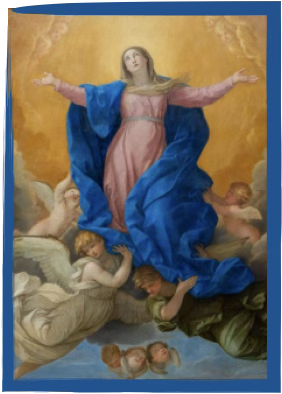
Solemnity of the Assumption of the Blessed Virgin Mary.Celebrated on August 15, it commemorates the Catholic dogma that the Virgin Mary was taken body and soul into heavenly glory at the end of her earthly life. It is a principal holy day of obligation in the Catholic Church. The dogma was officially defined by Pope Pius XII in 195 although the tradition and belief date back to the early centuries of the Church. |
|
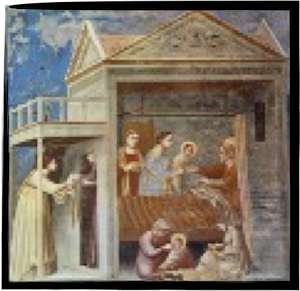
The Feast of the Nativity of the Blessed Virgin MaryCelebrated on September 8. This day marks the birth of the Virgin Mary, which falls exactly nine months after the Solemnity of the Immaculate Conception (December 8). While the Bible does not explicitly record Mary's birth, early Christian tradition holds that her parents were Saints Joachim and Anne. For Christians, this feast is viewed as the "dawn of salvation" because Mary’s birth heralded the coming of Jesus Christ, reflecting on the role of the Blessed Mother in Christian history. |
|
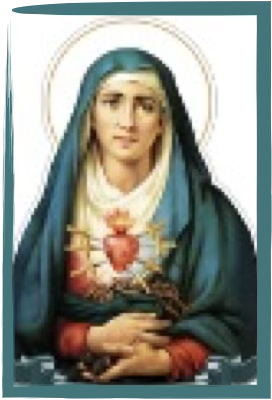
The Feast of Our Lady of Sorrowsis celebrated annually on September 15th. It honors the Blessed Virgin Mary and commemorates the intense spiritual suffering and profound sorrows she experienced throughout the life of her son, Jesus Christ. The liturgical memorial, which follows the Feast of the Exaltation of the Holy Cross on September 14th, is deeply rooted in Scripture and Catholic tradition. The devotion centers around Mary's "Seven Sorrows":
Historically, the feast was promoted in the 13th century and extended to the universal Church in 1814 by Pope Pius VII. |
|
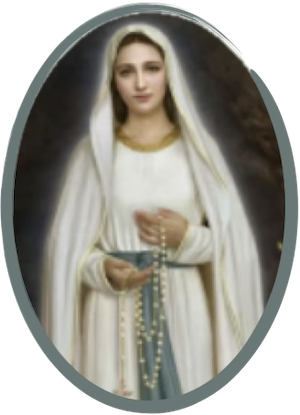
The Feast of Our Lady of the Rosaryis celebrated annually on October 7. It was established by Pope St. Pius V to commemorate the pivotal Christian naval victory at the Battle of Lepanto in 1571, which was attributed to the intercession of the Virgin Mary through prayer.
The celebration originally bore the title "Our Lady of Victory". Pope Gregory XIII later changed the name to "Our Lady of the Rosary," and Pope Leo XIII officially dedicated the entire month of October to the Holy Rosary |
|
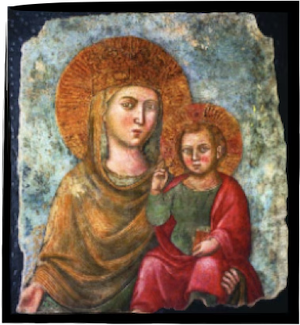
Our Lady of the Way.Known in her title in Italian as Madonna della Strada, she is the official Patroness of the Society of Jesus (the Jesuits). Although this feast is celebrated in May, the icon will be introduced in our Living Rosary on October 18, as we belong to a Jesuit parish, and many people may not know about her yet. The devotion holds deep significance for Jesuit spirituality and history. The original icon was a fresco located in a small wayside chapel along the ceremonial route of Popes in Rome. When St. Ignatius of Loyola and his early companions arrived in Rome, they lived near the area and ministered at this chapel. It then became the site where they prayed for protection, celebrated Mass, and made their vows. The title "Our Lady of the Way" echoes the Ignatian motif of the spiritual life as a journey or pilgrimage. This 13th-century icon is currently enshrined at the Church of the Gesù in Rome, which serves as the mother church of the Jesuit order.
|